Viser innlegg med etiketten ecology. Vis alle innlegg

20110103

Eco in Norway: Event followup! A Successful Eco Circle.


Group photo of the remaining participating audience at my event, December 18 2010.
A cold winterday the 18th of December 2010 was for some people to celebrate and sacrifice in the name of the obvious Christmas light. Most people went to go shopping in such circumstances, stressed and crowded. Instead, a group of people ready for change chose another alternative of sacrificing and lighting; they chose to enter my ecology event at the end of the autumn roadtrip in Oslo - city of the Tiger and even more; city of the coming greener future with planned urban district Sagene.  The district Sagene was a sponsor of my event.

At the event called "Fornybarfamilien", we came up with alternatives to energy saving, energy consuming, ecology practice, history of danish eco-societies and new economies. A New Year's Resolution is often something we think of as something being persuaded, just like doing the best for your family by buying the greatest stuff for Christmas, while another kind of Resolution could be one to prepare a family meal to the coming generation as in new habits, new environments, new systems of building and restoration, and new matrixes in organizations.

"Fornybarfamilien" (The Renewable Family) showed us that We are the Designers. Here I am trying to use my storytelling for this society's demand of excitement and participation in the age of the cyber nation which is the driving force of today's markets. The advertising industry has used this storytelling strategy for years! Now it is time for us to deliver the same in the sence of green storytelling! The consumers are the end target anyway. And they are driving our cycle in the sentence "what's in it for me". So therefor we are buying what is best told or best performed in the name of what is giving us a quality of life.

Qualities of life have different value in the different ages of time, it was reported. Before, products of high value was a status symbol and a tool to union the like-minded . Today, in our postmodern information society, the value is rather the quality of the products aim to bring us a most sustainable happiness. This way of thinking, is turning our consumer habits upside-down!
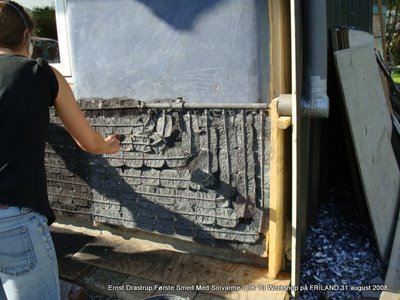
Demonstration of how to make your own solar heating from empty cans, by Denmark's engineer specialist on solar power: Ernst Drastrup. The demo was shown at the event.


The main motivation of holding this event, was to stimulate the creative thinking of a greener household and home. Many of the seminar speakers did all of this. The first part of this concept, was a test for upcoming challenges and maybe another event where I would like to bring a greater surrounding and a social experience for the audience to join.

At this event, the participants kept taking notes and asking questions all the time in a very intimate dialogue. The citizen of Samsoe (Samsø / Samso ) Energy Island in Denmark, Stefan Wollfbrandt, told us about all the benefits of his low energy positive house. New economies like ecology and economy in a circular system were also presented in hands-on methods and history of peak oil. We found out that solutions must not consist of only one. Solutions are made to connect , just like any circular system. That is why Denmark, which is a flat country, is a great provider of wind energy, wheras Norway could use alot more fjord or mountain energy.

Each environment has its own solution. We cannot just go blind by the oil prophecies of a greater future because our past was so great and rich, when the resources are running out and as we know it - the peak will come not slow, but fast as long as the rest of the world market expand in a different alternative direction than Norway. We'd have to follow, and we're slow on preparing for its peak. Sweden and Denmark are alot more adaptive.

The vulnerability of not investing in green technologies before it is too late on top of the mountain, was well documented by BI Center of Climate Strategy. The ticking bomb of the green growth was illustrated by a bottle of ketchup being sqeezed like it is now, and suddenly - there will be green all over the place!

At the event, I presented where Denmark is on the map compared to us in Norway. We live in a country with great distance between each other (originally) with mountains separating us, and we are used to an "ownership"-culture where nothing compromises with the mindset of collectiveness. While the danes live flat and connected, they're used to lot more sharing-culture. The challenge for the case of Norway, is that our resources must be rediscovered by ourselves, as it differ from the danish, and we must open up our own eyes to discover our own possibilities.

We usually say that we are lucky to be powered by waterfalls and their engines. And of course it provides us with most of our energy consumption. But even though we can rely on that water power is clean and a good resource for Norway, we also have to ask ourselves whether this is ecologically and holisticly renewable energy or not when it dries our watery ground, cuts off biological diversity, and looks terrible when constructed in our fjords? How renewable is it, then?...

The word holistic, is a part of ecology and the new economy and the new energy politics. The challenge for Norway, is to find our holistic perception again.
Transition Towns Norway was represented at the meeting, as well. They gave us hope on a system of meeting structure that works in plenty other cities and countries, also in a very holistic way of organizing and future-thinking.

The most exciting thing about the "Fornybarfamilien"-event, was that we were able to connect on a grassroot level to exchange views and strategies and telephone numbers for further building, and also coming together for a plot of a "fantasy home!" Everyone was included, and felt included. And as we turned around, we noticed how important it was to get the "inclusion"-factor on, and the "happy-feel-in-an-interactive-moment" on.

A group of people living in a neighbourhood in Oslo asked for more information from Samsoe on how to continue their work, and no outcome is better than that! - The inspiration to a greater action.

Slow Food Oslo also wanted to get more team members to continue their growth in Oslo - ironically for a slower consumption, but faster developement. See , this has turned upside-down! The past organizations of "slow structure/business as usual" has been replaced by fast organization and further own a slow, circular growth.

Seminar programme in Norwegian:
http://fornybarfamilien.origo.no/-/image/show/1620982_program-side1,
http://fornybarfamilien.origo.no/-/image/show/1620983_program-side2
20101124

Eco in Germany: The Econsense Forum , Berlin 2010

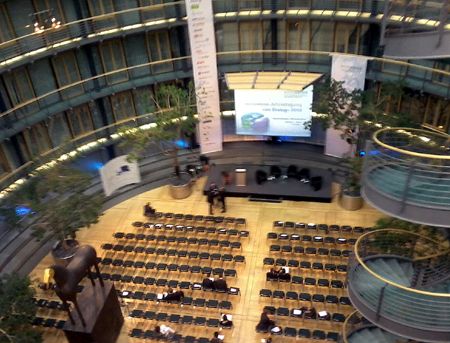
"Are you on the guest list?" Nope, I said. But my interest in the green management is so great that I am skipping all traditional tourist shopping just to come here, join you, and communicate back to Norway what is being said and discussed. Yep, I got in. :) The Econsense Forum, all men in suits, and me - a "journalist" slash blogger from Norway, previously being an editor of my own printed magazine by Art Council Norway for three years, though. No writer anymore, no editor anymore. Just me, an environmentalist. A CRAZY such one, and therefor - I GOT IN! Fabtastic, the Econsense! But seriously: Even though my ears only catched 50 percent of the german language all through the seminars, my eyes and their expressions and the logo "im dialog" made me understand maybe a hundered percent of this fantastic opportunity; a dialogue forum! Finally. The germans know, how to bring awareness to an upper management level. The dialogues between the leaders of firms and multinational companies, it all made me gaze and listen like never before, like my german knowledge from high school suddenly all came back to me. Because, they were on it. The leaders were on, discussing enthusiastically about serious mistakes in business and serious solutions. What immediately came to my mind, is that the movement called Corporate Social Responsibility no longer belongs to just a minor sector in business. Now big businesses are discussing it, too, and at this forum - ambassadors of many countries from all over the world entering Econsense. And this is giving what kind of signals? Of course: They know that they have to change for surviving in the turbulence of today's market and social changes. And of course to keep up with the green trends. Making strategies further from the functional management education. The creative education is on. The hybrid organizations are on. And, finally the social leader is on. This is just one more SIGNAL, that the world is aware of the upcoming changes on ALL areas in life; business and personal. It is on topic.
To get into their discussions abit, I would not put a resumé of their endless talks, but rather give a few examples of a common discussion here which is probably everyone's concern.  One is money and strategy. To change in business, there is always risk. What the leaders of Econsense were discussing, was not that their will of change is lower or less than any other environmentalist out there. Because quite surprisingly, everyone seemed to agree on the same thing; they all want to "become greener". But the question is always "how", and always "at what risk". Then first of all we must not forget, the financial and cost-benefit risks. Before entering these rooms, several leading companies of Germany had published a long report from 2009 with aspects and reviews of their implemented green-social sustainability and improving technologies in environmental-friendly, internal managing. These reports showed the balance and the income and the benefits of the 2009 changes. They also gave some future predictions and ambitions. So when entering the conference, none of these firms came with fresh pen and blanc papers. They were all adjusted and "educated" in their own company experiences. The debate further on, was whether or not the balances showed them any "likes" of taking more ambitious risks. The speekers were a couple of scientists, firm leaders with great background on resources, foresighters and reps from the European Union. To lead the debate, I noticed that they questioned other company managers more in depth on behalf of the science of resources and financial crisis. The negative responses always came when the scientists proved them how easy things are in the logic of what we have damaged and what we easily need to do, while the positive responses and raising eyebrows always came when the scientists told them how much other green companies have gained by improving their corporate responsibility. So conclusion on this observation is: They/We, all know the irresponsible style has damaged the flow. And they/we all want to get back the flow we used to have, and the better and greener solution there is - the more positive. So from talks to practice : It is not very far to walk from the table to the backyard and find all what we are looking for. Everyone CAN be happy, the problem is just to turn around the view and see WHERE is the solution, because it is just there in front of every non-creative businessleader who's just not able to see where the road split. And he or she is always happy when served.

Final conclusion of this bubbly meeting, except delicious meals and talks with ambassadors where I felt I could even touch their tie and stretch it a bit ..:)..is that there is no one out there with inhuman ambitions! Even the most conservative can turn into the greenest car driver if he'd only be presented of a few brilliant pitstops where his car can be restored and charged.

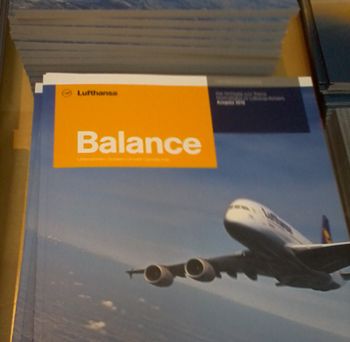
Lufthansa is at it.
Volkswagen is at it.

Vodafone is at it.

Deutsche Bahnhof (the Train service)

Market, People, World, Company. What It Tells We Must Do.

20101108

Eco in Denmark: Art and ecology (it's the International Year Of Biodiversity!)

When entering the train to say goodbye to Copenhagen some week ago, I passed the ambitious art installation at Kongens Nytorv in the middle of city centre - marking the 2010 International Year Of Biodiversity.


This was yet again an art installation about ecology, and it got to my mind how important ART can play a role for the whole concept of making 'ecology' more public: When there is no words or too much words to describe today's situation for people to get into the real feel of it, or when you feel pushed to understand something you don't and what you've got left is to listen to the heart, art can be the way to give you not the answer, but to inspire your mind to search for your own answer, in the state where you let go of the ego waiste and let yourself into the openness that is of art. The question: What did you feel when looking at this painting or film? Either way it moves you.

The Living Facade

The art project called The Living Facade, illustrates all the diversity of botanity, by installing seasonal plants from Scandinavian nature, directly into a modern, urban city building. This is practically nature and diversity coming to the city again. So back to art and ecology, Denmark here wants the city to bloom, just like Europe is so colorful with all the diversity in both culture and management. We need to picture this, also in nature, and into the architecture of course. Making similar minimalism in Scandinavia all empty of plants, seems unnatural to the different shades of our otherwise attitude.


One of the signs says, and here comes something everyone should absolutely know: "What is biodiversity? Life on earth has unfolded in countless diversity of genes, species, habitats and ecosystems. This biodiversity provides for our basic needs, such as food, water and clean air, but also delivers the resources that drive our economies. On the lighter side of life, biodiversity provides opportunities for recreation and socialising."

And further: "Despite its fundamental importance to human well-being, population growth and unsustainable consumption of natural resources are putting increasing pressure on the richness of life. Biodiversity is being lost at an alarming rate both globally and in Europe.

To raise public awareness about biodiversity, in 1993 the United Nations proclaimed 22 May as the International Day for Biological Diversity. Most recently it designated 2010 as the International Year of Biodiversity."

Eco in Norway: Art and ecology

In Norway, we have loads of ecological innovation in both technology, architecture, recycling and education. But I´d say the position where we have the most universal agreements with the rest of this green world, is in the world of art! At least there is one area where we all agree on what is the most important: Having dreams. This past week, there has been running an exhibition called "Gentle Actions" at the Artist Center. I was there for two days of this week, mainly to get more contacts for my own plans in the collaboration field, but also to view some of its installations and films, like this recommended "Garbage Dreams" about western trash companies recycling 25 perscent destroying a people movement of a genius 80 percent recycling system in the poor areas of Cairo :


The trip to this exhibition was well worth it, as the non-profit Green Drinks-organization made people gather just to talk randomly about environment as we discovered as soon as many people join together, less people are avoiding to not do something. There was a speaker from the University of Oslo, saying something very important to us: When the environment movements fragments into different directions, one of the most common fears is that the future tomorrow might not be here. While she was stating, the future of tomorrow is NOT created yet. We have to remember, that the future is how we DECIDE. We are designing it, every moment.

The future is not built, nor can be predicted in detail, as it depends on how we act , from now ON. And upon action, one can build what is not yet built. So therefor she was calming down a fact we all worry about: The way we destroy our planet or the way we act today. It does not necessarily mean that we can not change it. Because we know our faults. And it is much easier to turn around when you know, than if you don't. We are somewhat lucky, because especially the internet, and the worldwide books and education and knowledge, has taught us something useful. We can design. We often forget that we are creators. Like this artist group. We design, every new change. There is nothing that we can not do.

Today,  I watched an imported popular science-program on national TV about finding intelligent life on other planets (still running with same popularity with the same questionmarks since the first black 'n white-shows about green men in the late 60s), and I payed much attention until the stupid last comment at the end of it: "And when we find Sigma"..finally at the end of planet searches similar to Earth.."..in 2040, we can then send a lazer searching for industrial garbage surrounding its atmosphere...", and listen..this is even more stupid: "..which will give us signs about INTELLIGENT life on another planet maybe highly more developed than what we are today"...... yea. As if industrial garbage in space is what all planet intelligent creatures figure out  is the one way out. The one way to developement, as we have learned from the very start of our western civilization only pushing us further to its limit. Aaargh... Forget it, Earth, you'll never find life on other planets searching like you do.

A quite different kind of intelligence

20100919

Eco in Denmark: Back in Copenhagen and leaving Friland


Look closer!.. reused spoons :)
What a big contrast! Coming from the middle-of-nowhere-still-everywhere Friland and to Copenhagen, even makes you able to tell the difference between thick and dusty air and fresh smell of sunflowers. I came to the central station yesterday, leaving my suitcase at my friend's house from previous studies, and noticed I was still wearing the dirty boots from gardening when I passed some of the high heelers at the station, and I wasn't even caring. How could I suddenly stop caring about such details? I guess I came from another world, another priority, another set of mind where things like saving Pakistan and creating sustainable solutions are alot more important than things that can easily break, like heels. But on the same time, I feel freedom walking in a crowded city. Not being anonymous, but being connected. Feeling connected, more to a thousand individuals than to a few isolated ones. And, ironically, those ladies walking in high heels just smiled easily back at me, and I smiled back at them, and we were just one mind - two different pair of shoes, one world. Still walking the same street.

Hmm.. they say that those ugly bricks creating an old street from the 30s were intended to be a woman's enemy, as they all had to dress in high heels and not moving as fast forward as those wearing boots, usually men. So that men could run the cities, and women could just decorate them. That is how city life was created. I believe in it, no feminism thrown in it. It was practical at the time. Practical for creating the industrial revolution and side by side, creating social values to fit into it. We forget, that our common habits in today's fashion is all part of industrial expansion only, but when cities expand in the green direction, one suddenly discovers a mixture of habits like boots, heels, barefoot, crocks, sandals, sneakers, and the back-friendly wellness-shoes with a round step (that everyone tired from working stress seem to wanna buy, ironically). But I love the variation. That one can be a farmer in the city, basically. One can transform this whole city, into a green city. The details only decorating this thought. ;)

"Create your world" - Friland:


Yellow field: Empty, but soon filled with new homes in Phase 3.

Caroline's square straw bale house
Einer's non-square wooden houses
Pop an isolation idea!


From green to blue 2022!

For more green and blue, follow the ongoing Blue Space  collaborative initiative by me , just started up in its beginnings for an enduring l...